Websites built before you decide.
rebuilt.studioFive steps. No magic.
- 01Find
Every morning a Firecrawl crawl pulls service businesses with bad sites in a target vertical (metrology, manufacturing, fabrication). Screenshots + structured signals land in Supabase. The queue picks the prospect, not me.
A scheduled cron hits Firecrawl with a vertical query — "metal fabricators Indiana" — and crawls the first 30–50 results. Each result gets scraped for name, services, location, contact info, original site screenshot, and a structured "viability" signal package: load speed, schema-rich-ness, last-update guess, mobile-readiness.
Every prospect lands in Supabase with a 0–10 score. Anything below 7 gets parked in a backlog. Anything 7+ shows up in the operator console the next morning, sorted by score, ready to design.
I never type a name. I never pick a city. The queue is the boss; I just say which vertical to point it at next.
Firecrawl · Supabase · Next.js cron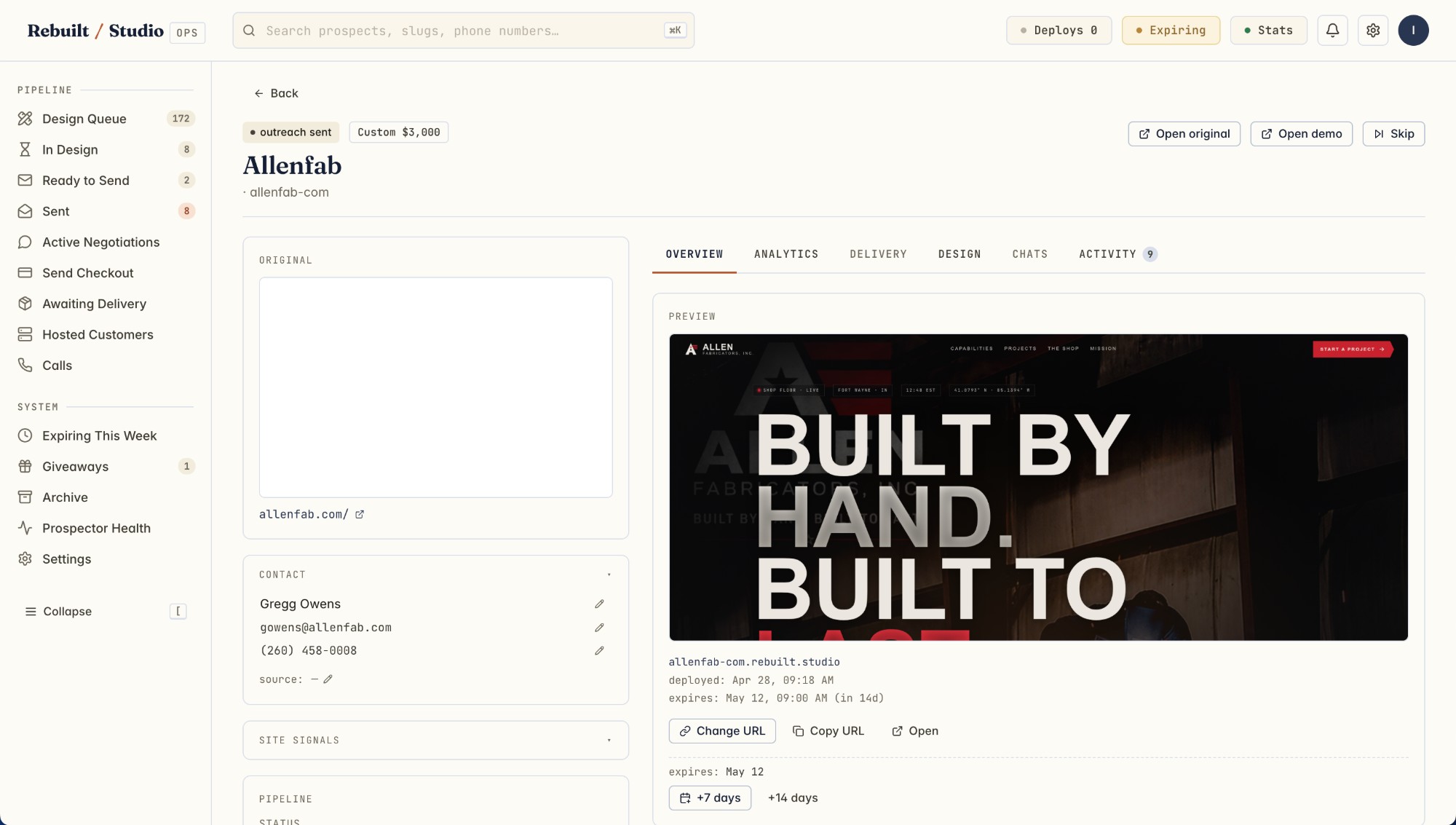
- 02Prompt
Each prospect gets a design brief auto-assembled from three blocks: their business details, a taste reference, and an AI-generated reference image fit to their vertical. Claude gets a brief, not a guess.
Block one is the business: name, services, address, phone, the contact human, photos lifted off the original site. Block two is taste: a curated list of 3–5 sites in the same vertical that already look great, captured as references the model can look at instead of guess at.
Block three is the secret sauce. ChatGPT (with image generation) gets fed the original's vibe and is told to render a stylized, on-brand reference image for the rebuild — a hero composition, a typography moodboard, a real product photo if there's one in the brand palette. Claude sees what "good" looks like before it writes a single line.
The brief is auto-assembled into a single prompt and dropped into Claude with the design system spec. Three taste references plus one generated reference is the sweet spot — fewer and it guesses, more and it averages.
ChatGPT (image gen) · GPT-4 · custom prompt assembly
- 03Design
Claude Design ships the full site as a JSX export — every section, every component, real copy. No page builder. No Figma. The export is the truth. The template wraps it. About 30 minutes per design.
Claude Design takes the brief and outputs a full JSX file with every section, every component, every line of copy. Hero, services, capabilities, FAQ, testimonials, contact — all in one export. Real copy, not lorem ipsum, written from the original site's actual content.
The output is type-safe TSX. No drag-and-drop, no page builder lock-in. If a section isn't right I tell Claude what to change in plain English; if it's right I move on.
About 30 minutes per design, on average. The slow part isn't the AI — it's reviewing the output. Claude does the work; I do the taste.
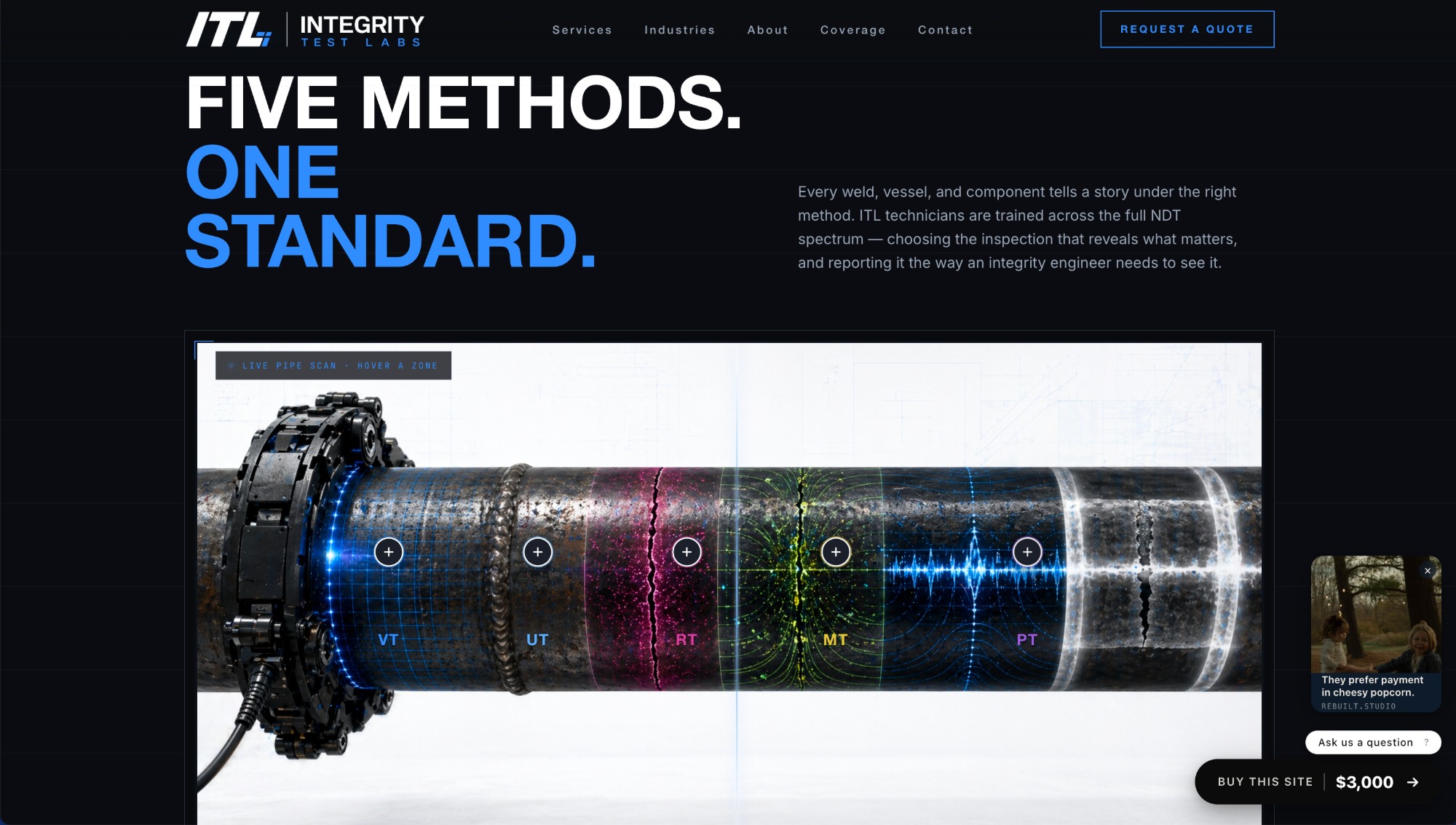
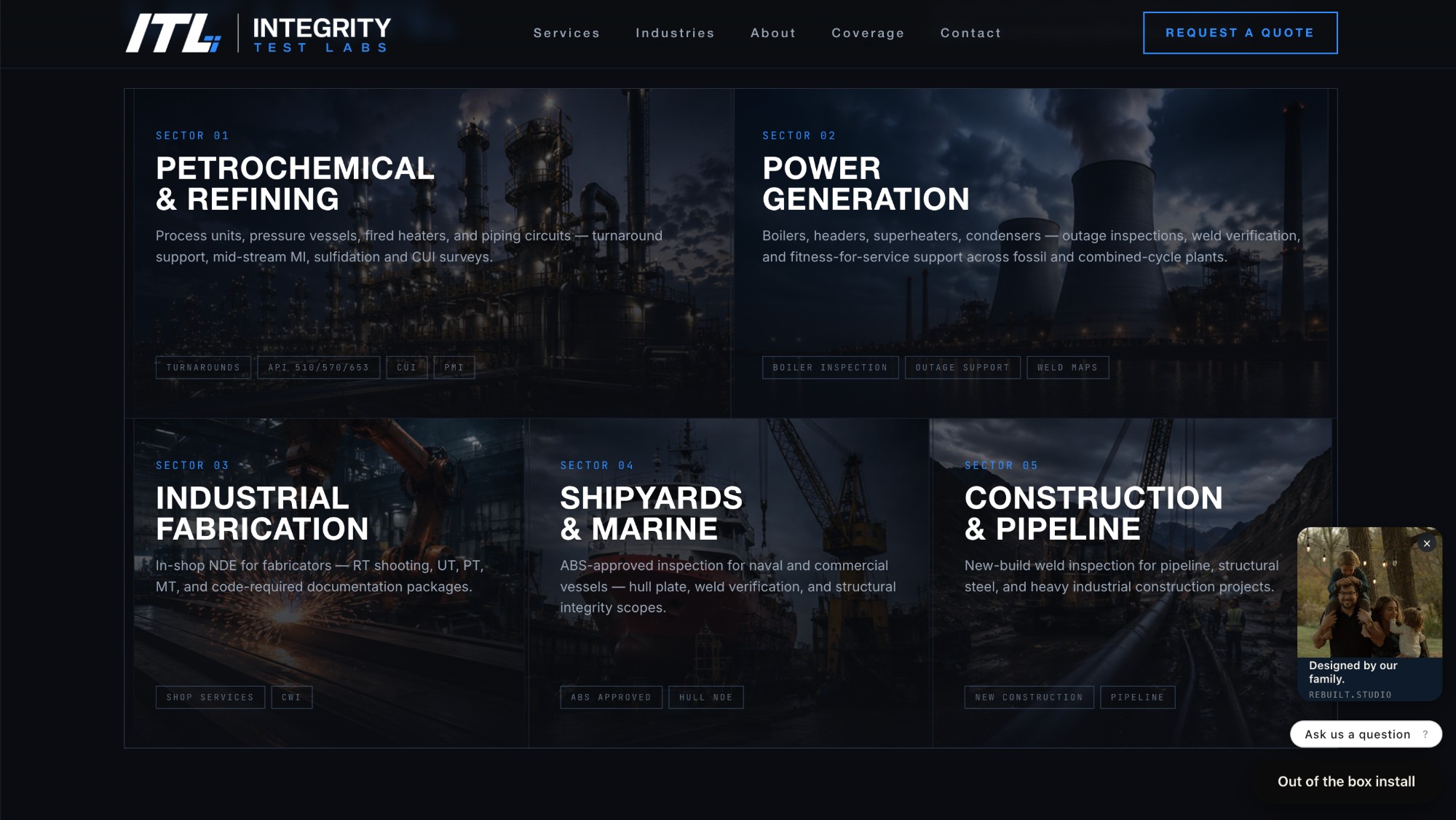
See the Integrity Test Labs rebuild live →Claude Design · JSX · design system spec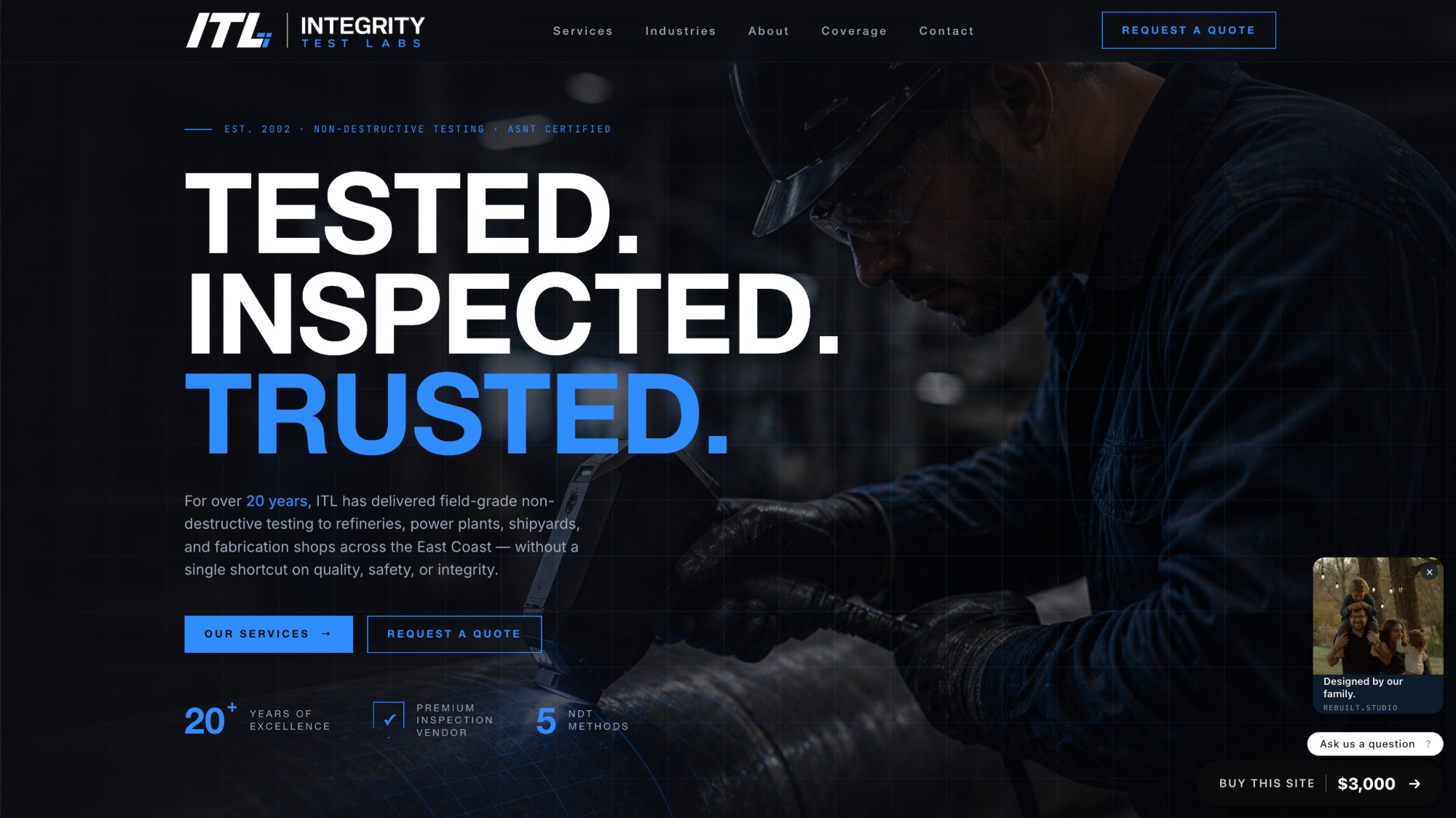
- 04Ship
One command forks a Next.js template on GitHub, deploys to Vercel, generates the OG image and favicon from the prospect's real logo, and writes the live URL back into the database.
The template is a vetted Next.js app with the schema markup, the FAQ, the contact form shim, and the tracking beacon already wired. The script clones it, drops in the JSX export from step 3, builds, and pushes.
Vercel auto-deploys at <slug>.rebuilt.studio. Sharp generates the OG image and favicon from the prospect's real logo (or a vertical-appropriate fallback). The script writes the live URL, the deploy timestamp, and the build hash back into Supabase so the prospect detail page in ops shows a working preview.
Total time from "design approved" to "live URL in the database": about 90 seconds.
./scripts/new-demo.sh prospect.zipNext.js · GitHub · Vercel · Sharp · Supabase - 05Reach
Cold outreach goes out with a working demo at a real domain. "Here's your new site" converts higher than "want to hop on a call?"
The outreach email is plain-text first-touch — no HTML tracking pixels, no images. Just the prospect's name, a one-line observation about their current site, and a link to the live demo we already built.
Resend handles delivery. Reply rates land 4–6× higher than generic cold pitch because the conversation starts at "what do you think of the rebuild" instead of "would you be open to a call." The demo is the pitch.
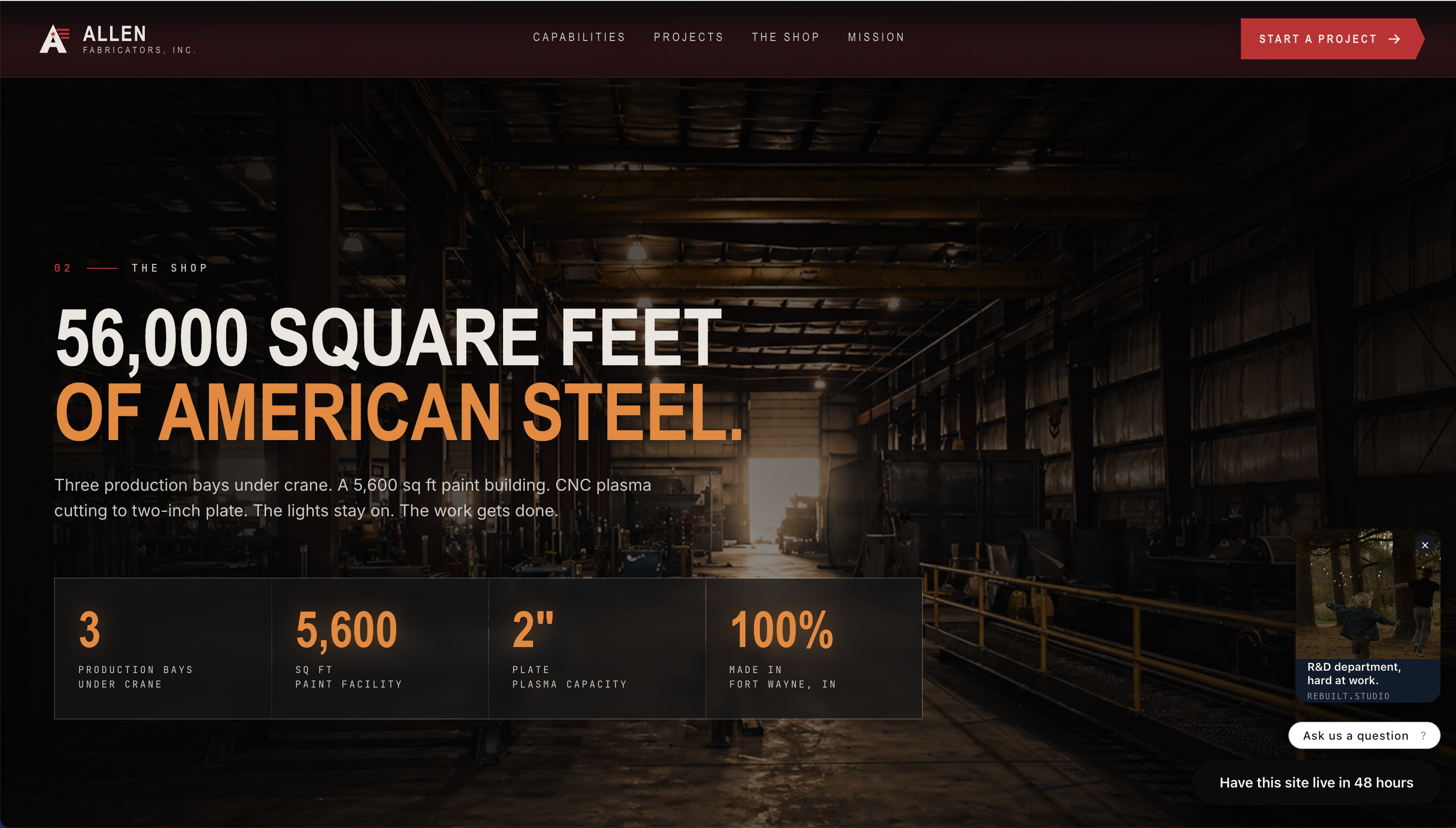
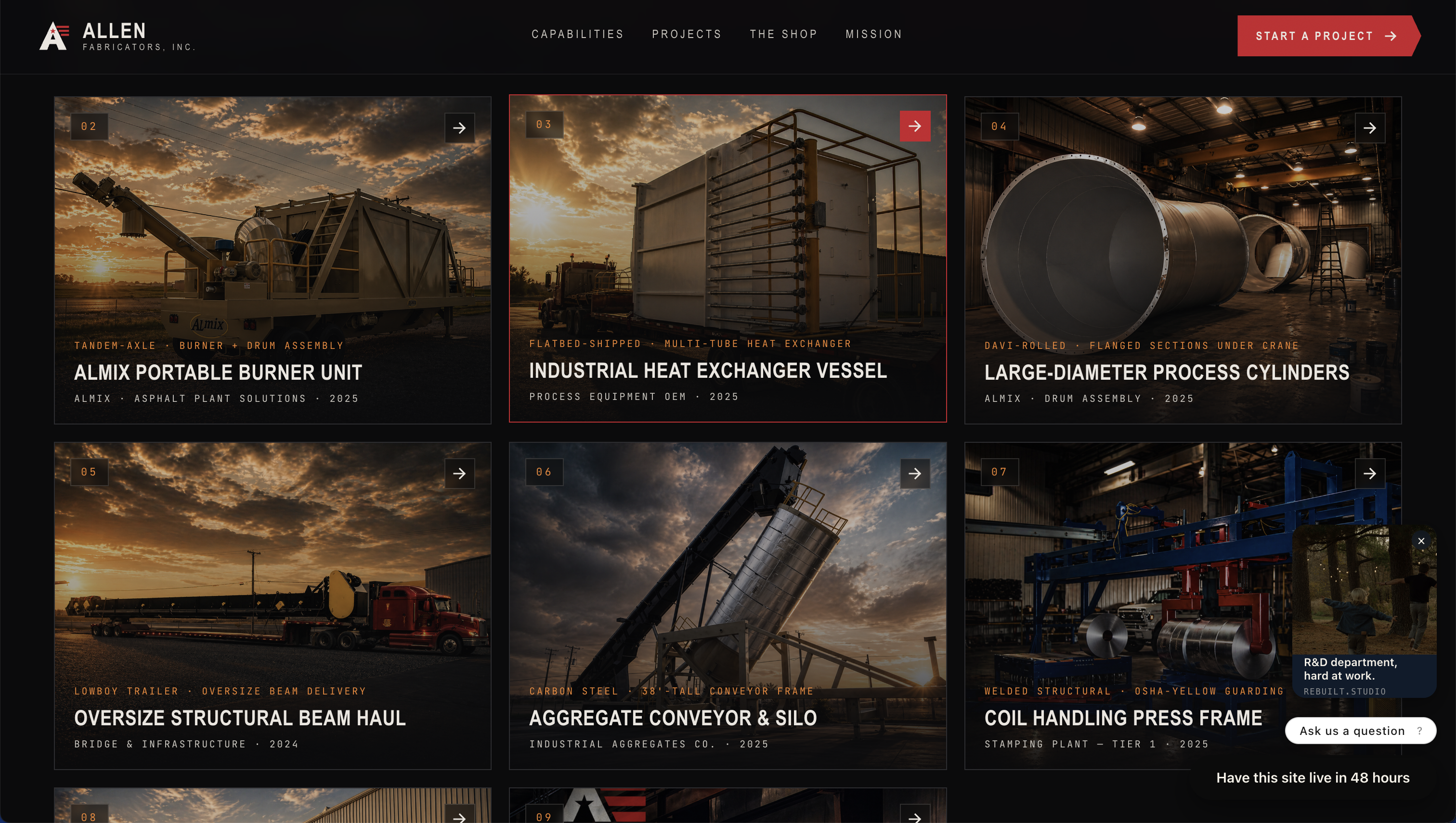
Every demo URL on this site is a real example. Click through to see what gets sent.
See the Allenfab rebuild live →Resend · plain-text first-touch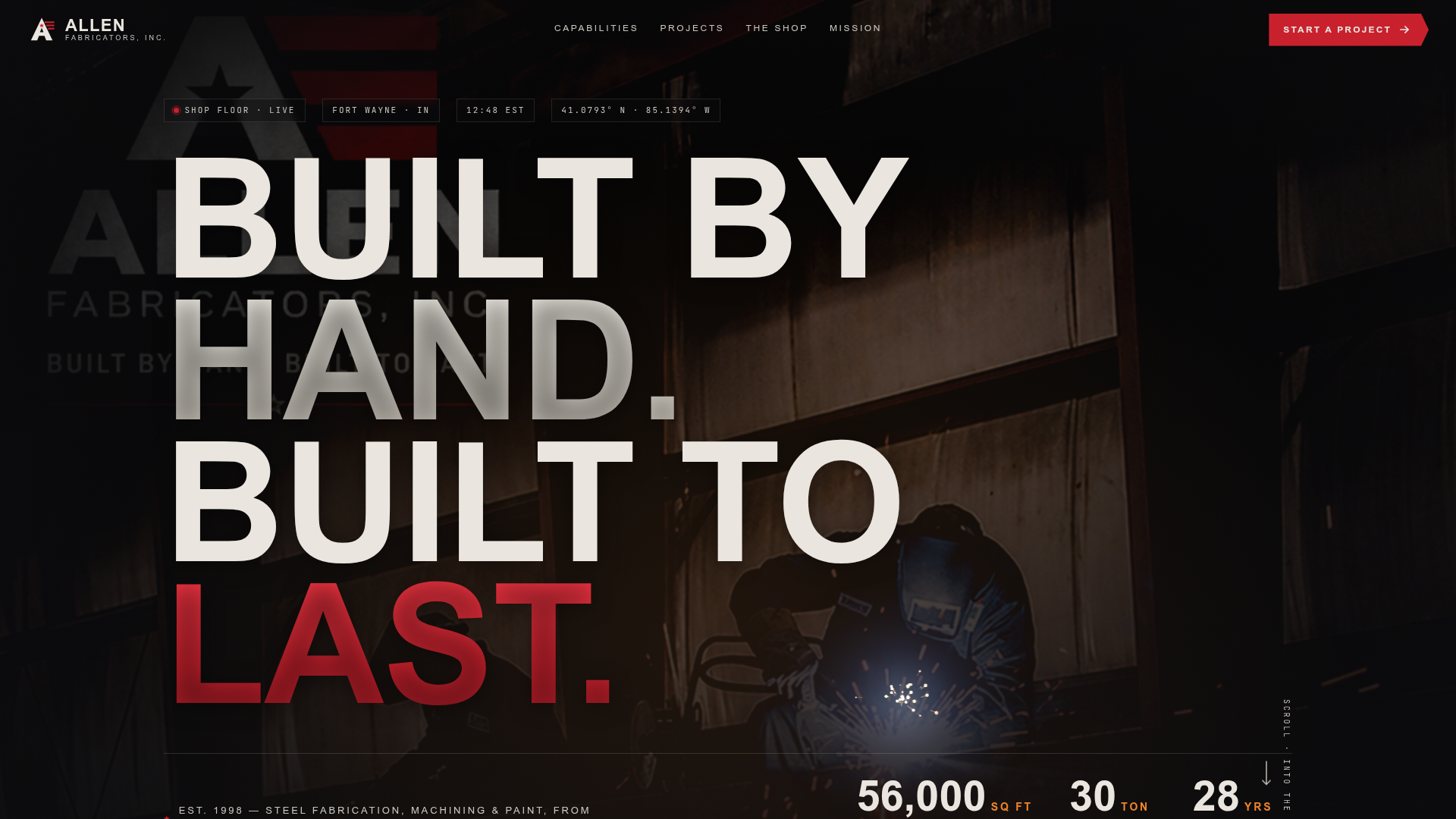
Websites built before you decide.